

 立即咨询
立即咨询 产品说明书下载
| 产品名称 | HG-HO138957 | 产品类型 | ORF表达质粒 |
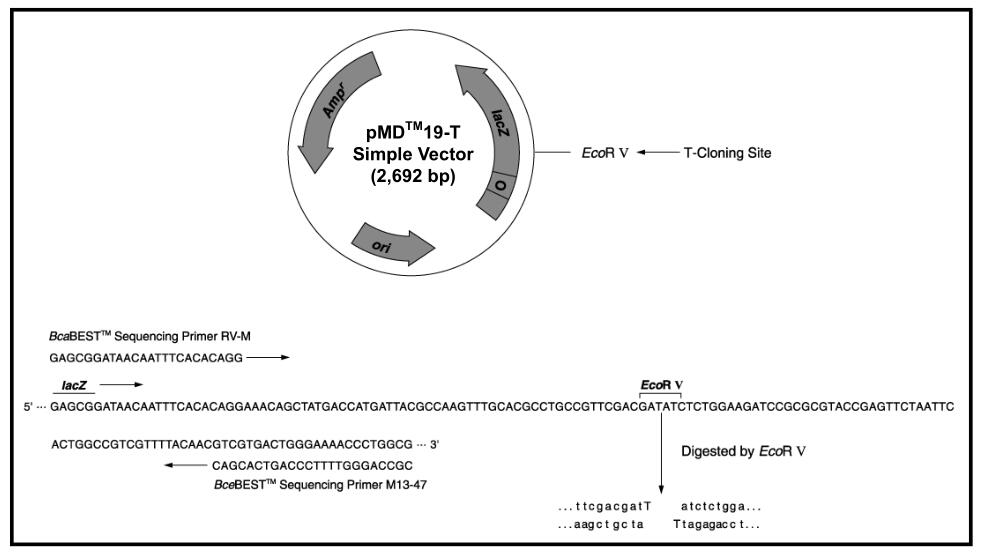
| 产品货号 | HG-HO138957 | 装载载体 | pMD19-T Simple Vector |
| 基因信息 | Homo sapiens mitogen-activated protein kinase 1 (MAPK1,ERK2), transcript variant 2, mRNA | NCBI序列号 | NM_138957 |
| 出货周期 | 现货 | ||

MAP kinases, also known as extracellular signal-regulated kinases (ERKs), act as an integration point for multiple biochemical signals, and are involved in a wide variety of cellular processes such as proliferation, differentiation, transcription regulation and development. ERK is a versatile protein kinase that regulates many cellular functions. Growing evidence suggests that extracellular signal-regulated protein kinase 1/2 (ERK1/2) plays a crucial role in promoting cell death in a variety of neuronal systems, including neurodegenerative diseases. It is believed that the magnitude and the duration of ERK1/2 activity determine its cellular function. Activation of ERK1/2 are implicated in the pathophysiology of spinal cord injury (SCI). ERK2 signaling is a novel target associated with the deleterious consequences of spinal injury. ERK-2, also known as Mitogen-activated protein kinase 1 (MAPK1), is a member of the protein kinase superfamily and MAP kinase subfamily. MKP-3 is a dual specificity phosphatase exclusively specific to MAPK1 for its substrate recognition and dephosphorylating activity. The activation of MAPK1 requires its phosphorylation by upstream kinases. Upon activation, MAPK1 translocates to the nucleus of the stimulated cells, where it phosphorylates nuclear targets. MAPK1 is involved in both the initiation and regulation of meiosis, mitosis, and postmitotic functions in differentiated cells by phosphorylating a number of transcription factors such as ELK1. MAPK1 acts as a transcriptional repressor which represses the expression of interferon gamma-induced genes. Transcriptional activity is independent of kinase activity. The nuclear-cytoplasmic distribution of ERK2 is regulated in response to various stimuli and changes in cell context. Furthermore, the nuclear flux of ERK2 occurs by several energy- and carrier-dependent and -independent mechanisms. ERK2 has been shown to translocate into and out of the nucleus by facilitated diffusion through the nuclear pore, interacting directly with proteins within the nuclear pore complex, as well as by karyopherin-mediated transport. ERK2 interacts with the PDE4 catalytic unit by binding to a KIM (kinase interaction motif) docking site located on an exposed beta-hairpin loop and an FQF (Phe-Gln-Phe) specificity site located on an exposed alpha-helix. These flank a site that allows phosphorylation by ERK, the functional outcome of which is orchestrated by the N-terminal UCR1/2 (upstream conserved region 1 and 2) modules.
pcDNA3.1-musSlc46a3-3xFlag表达质粒
pCDH-musDhodh-3xFlag-Puro表达质粒
HG-MO077514
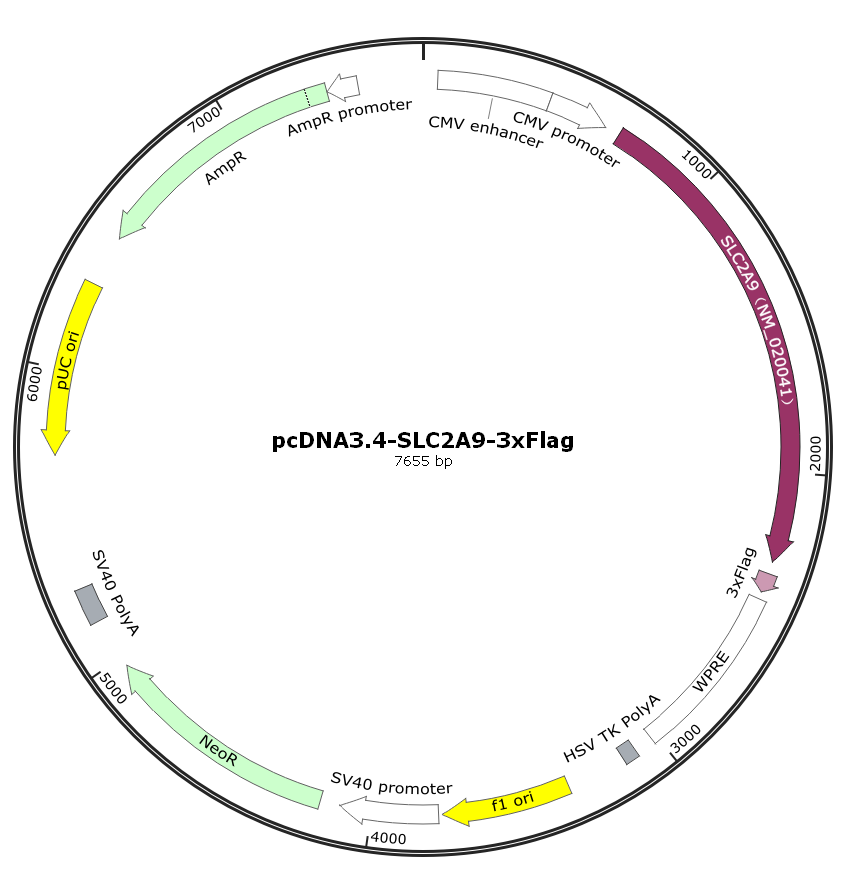
HG-HO020041
HG-HO394553
HG-HO318787

HG-HO017758

